
How Churches Move from Structure to Purpose: The 4 Phases of Simplified, Accountable Leadership
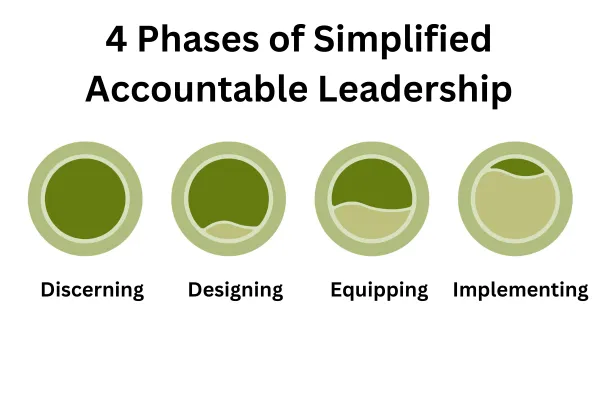
When churches first hear about Simplified Accountable Structure (SAS), it can sound like just a new way to organize meetings or streamline leadership. But SAS is far more than a structural shift—it’s a spiritual and cultural journey that unfolds in four distinct and intentional phases: Discerning, Designing, Equipping, and Implementing.
1. The Discerning Phase (3-6 months)
Typically beginning in January, this is where the journey starts—with prayer, conversation, and discernment. A coach is dispatched by the district superintendent (DS) or contracted by the church once church leaders express interest in exploring SAS. Together, the coach, pastor, council chair, and lay leader form a Discernment Team that develops a communication and prayer plan for the congregation’s discernment of the model.
After a period of exploration and dialogue, the discerning team reports back to the church council, which then votes and—if ready—makes a formal request to the DS to adopt the new structure through a church conference resolution. Once the DS approves, the church conference is scheduled (usually by June), and new leadership nominations begin to take shape.
2. The Designing Phase (1-3 months)
As the Discerning Phase moves towards, it is time for leaders to begin designing their new structure. This includes folding all church entities under the responsibility and authority of the leadership board and creating an organizational chart to clarify the new structure design, roles, and responsibilities. In this phase, the structure is clarified and begins to take shape.
3. Equipping Phase (4–6 months)
Beginning midyear, this phase focuses on training and preparing leaders for success. The coach trains the nominations team in the new leadership process and helps them develop a leadership development plan. The new leadership board receives training—typically in November or January—so that everyone understands their roles, responsibilities, and rhythms under SAS.
4. The Implementing Phase (Year One)
The final phase begins in January and lasts a full year. Here, churches begin living into the accountable leadership model. The coach works closely with the pastor and leadership board, helping them create a leadership covenant, guiding principles, and a new SAS agenda and packet system for effective meetings.
Regular coaching sessions, quarterly course corrections, and a strategic ministry planning retreat help the board stay focused on mission, alignment, accountability, and healthy team dynamics.
Through these four phases, churches don’t just change their structure—they transform their leadership culture, aligning their focus on mission, discipleship, and Kingdom impact. If your church is considering the SAS model or your leaders desire to live deeper into SAS, check out the latest SAS resource, Mission Possible 4: Simplifying Church Leadership.