

Simplified, Accountable Structure (SAS)
Are you frustrated with long meetings
that accomplish little to nothing?
Do you feel like the same conversations and decisions
are occurring in multiple committees?
Are the layers and complexity of decision making
no longer working for your church?
Do the number of committee slots to fill
outnumber the current leaders available?
Do you have a desire for more efficient, effective,
and impact-focused decision making practices?
Maybe it’s time to consider
Simplified, Accountable Structure!
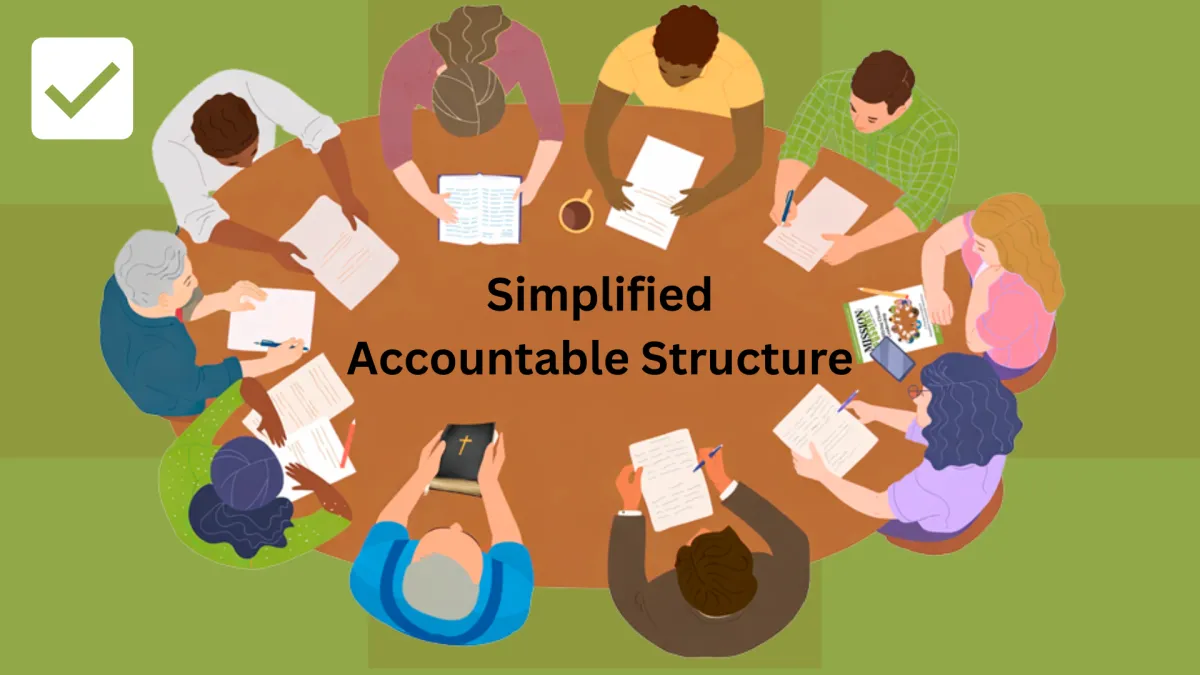
Simplified, Accountable structure (previously referred to as the single board model, minimum structure, or one board model) moves churches from four administrative committees (trustees, finance, staff-parish relations, and church council) to one Leadership Board encapsulating all responsibilities and authority of the previous four separate administrative committees in compliance with the UMC Book of Discipline in Paragraph 247.2.
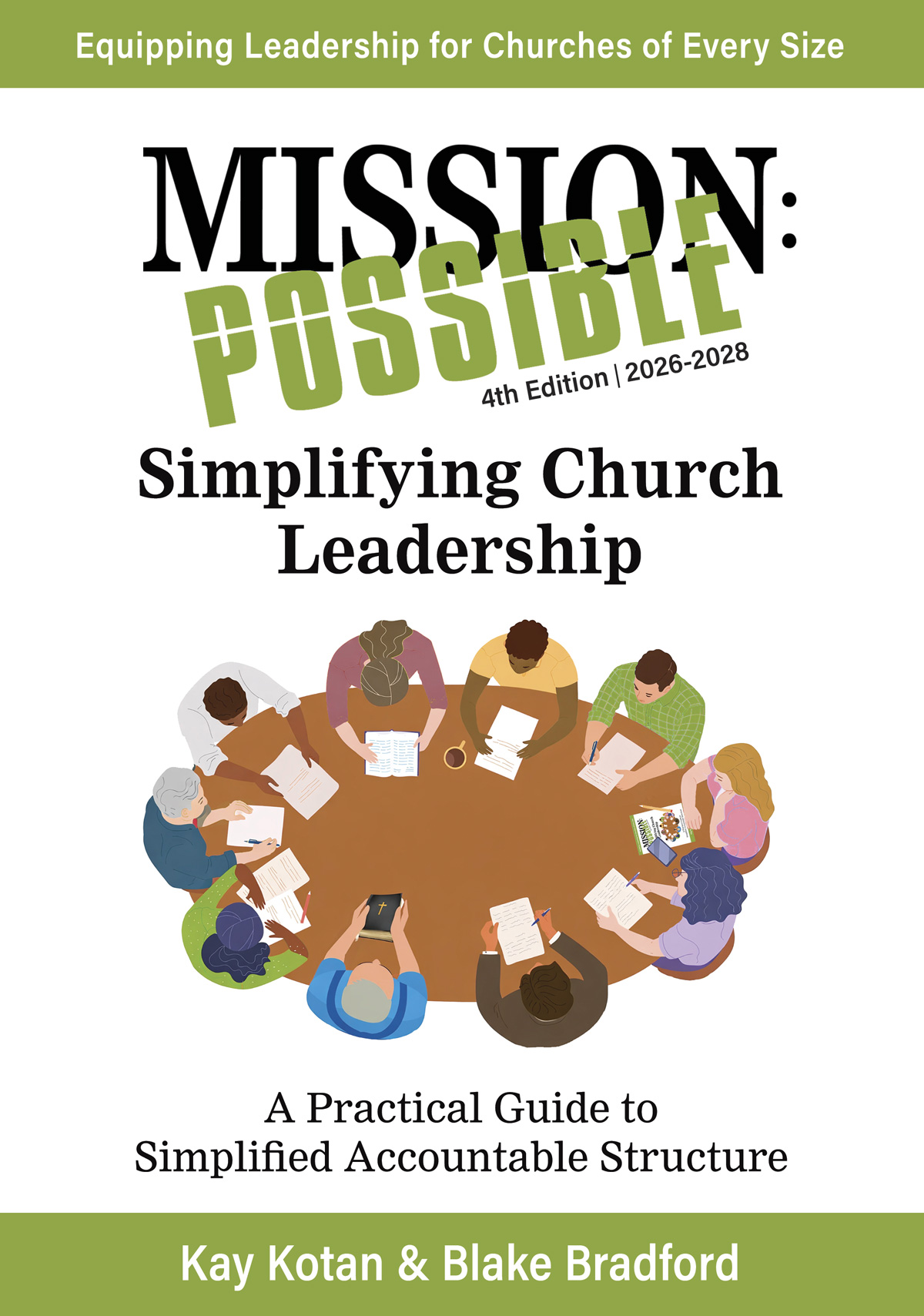
Over the past dozen or so years, this model of leadership has evolved as more and more congregations have moved to this structure and learned how to incorporate the much needed accountable leadership. Kay Kotan and her co-author Blake Bradford have helped thousands of leaders and hundreds of congregations across the country shift into this model through training, consulting, SAS Coach Training, and their best-selling resource guide, Mission Possible.
Frequently Asked Questions
What Is the Simplified Accountable Structure?
Simplified Accountable Structure consolidate the key administrative functions of Finance, Trustees, Staff/Pastor-Parish Relations, and the Church Council into one Leadership Board that oversees mission, vision, and stewardship together. Instead of multiple committees working in isolation, the church has one cohesive board that meets reguarly to discern, decide, and stay aligned with the mission.
Is the One Board Model Right for Your Church?
The one-board model (referred to as simplified accountable structure) is not the right fit for every church, but is the right fit for many churches. This is why it is important to follow the dicernment steps we outline in Mission Possible 4 to help churches make this decision for their unique church in this season of ministry.
Benefits of the Simplified Accountable Structure
There are multiple benefits such as releasing more disciples for ministry instead of administrative work, holistic approach to missional leadership and alignment, allows the church to be more flexible, adaptable, and innovative, a more focused approach to missional effectiveness, and move the leadership board out of management into governance (the intended land of leadership).
What are Some Common Challenges When Implementing a One Board Model (Simplified Accountable Structure)?
During the implementation phase, common challenges include not having a leadership covenant, delaying the creation of guiding principles, failing to change the conversation and agenda at the leadership board table, and underestimating the importance of congregational communication.
One Board Model (Simplified Accountable Structure) vs. Traditional Church Committee Structure
Simplified Accountable Structure combine the four administrative committions (Finance, Trustees, Staff/Pastor-Parish Relations, and the Church Council into one Leadership Board. In traditional structure, those same four unique administrative committees act indepdently from one another.
Steps to Transition to a Simplified Accountable Structure
There are four phases: Discerning, Designing, Equipping, and Implementing - all of which are outlined in detail in Mission Possible 4.
Where Can I Find Resources for Church Boards and Leadership Teams When Implementing the Simplified Accountable Structure ?
Kay Kotan has spent many years developing resources for church boards and leadership teams. Find the links to all resources below. Mission Possible 4 is the latest edition of the the book co-authored with Blake Bradford written on the subject.

